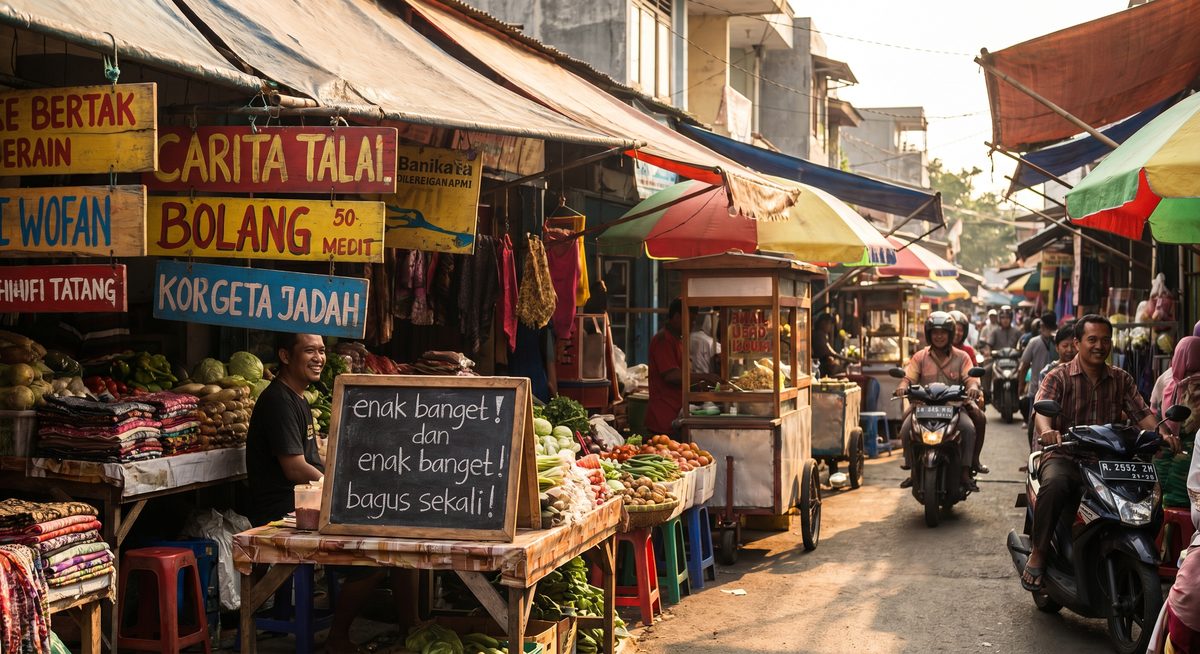
There's a small trap waiting for anyone who learns Indonesian from a textbook. You pick up sangat for "very", feel confident about it, and then hear someone say enak banget! at a warung and wonder what you've missed. You had missed something.
Indonesian has multiple ways to express degree, and they don't work the same way. The one most courses teach first, sangat, goes before the adjective. The one most Indonesians actually say, banget, goes after. This sounds like a footnote until you get it backwards and say enak sangat, which technically works but sounds like you learned Indonesian from a government press release.
Sangat: the formal one
Sangat is the written-Indonesian version. You'll find it in news broadcasts, official documents, university lectures, formal emails. It sits before the adjective: sangat panas (very hot), sangat bagus (very good), sangat mahal (very expensive). Nothing wrong with using it conversationally, but it carries a register. Think of the difference between saying "extremely" and "really" in English. Both work. One sounds like you're giving a speech.
Banget: what you actually hear
Banget is the street version, and it comes after the adjective. Panas banget (so hot), bagus banget (really good), mahal banget (way too expensive). In Jakarta you'll hear this dozens of times a day. Someone compliments your cooking: enak banget! A film dragged on: ngantuk banget nonton itu (so sleepy watching that). It's the default intensifier in casual speech for most Indonesians under 40.
One useful thing about banget: it attaches to verbs and adverbs too, in ways sangat generally doesn't. Cepat banget (really fast), sering banget (way too often), terlambat banget (so late). You can pile these constructions up in casual conversation without anyone minding. The safe rule: sangat before clear adjectives; banget after almost anything that takes a degree word.
Sekali: somewhere in between
Sekali, like banget, goes after the adjective: panas sekali, mahal sekali. But it sits at a slightly more formal register than banget while still being less stiff than sangat. You'd see it in a politely-worded complaint or hear it from a teacher. If banget is "super hot" with a bit of drama, and sangat is "extremely hot" on a weather report, sekali is just "very hot" without the exclamation mark.
In practice, banget and sekali are often interchangeable and you can usually pick the one that sounds right to you. Some Indonesians associate sekali with a slightly more Javanese-influenced register; banget feels more Jakarta. The distinction is soft and regional rather than strict.
The rest of the degree spectrum
Below "very" there's agak for "a bit" or "somewhat": agak mahal (a bit pricey), agak bingung (a bit confused). Then lumayan, which resists clean translation. "Pretty good", "not bad", "fairly" all fit depending on context and tone. Lumayan enak can be genuine appreciation or faint praise; a lot depends on the delivery. And cukup means "quite" or "enough": cukup bagus (quite good), which in Indonesian can shade into "good enough that I won't complain."
This part of the language rewards real attention. Indonesians load meaning into the gap between lumayan and bagus banget that a learner scanning for vocabulary might easily miss.
Sama sekali: "not at all"
Worth noting separately: sama sekali tidak means "not at all", and it usually comes before the negative: saya sama sekali tidak mengerti (I don't understand at all). In quick conversation, people drop the tidak and use sama sekali? on its own as a surprised question. It shows up in strong denials and emphatic corrections more than anywhere else, so it's worth having in your back pocket.
This formal-versus-informal split runs through a lot of Indonesian vocabulary. The post on tidak vs nggak covers exactly the same dynamic for negation: a formal word and a casual one that mean the same thing but live in different registers. And if you want to go further into the words that colour Indonesian conversation without quite being intensifiers, the post on particles like lah, dong, and sih is the natural next step. Those particles often work alongside intensifiers to add even more emotional shading.
For a broader look at real conversational Indonesian and what people actually say day-to-day, the gaul post covers the wider landscape of informal vocabulary that banget belongs to.
If you want to practise these in context, our app builds exercises from real Indonesian sentences so you can see how banget and sekali actually get used rather than just memorising their position rules. Our plans start free and go from there.