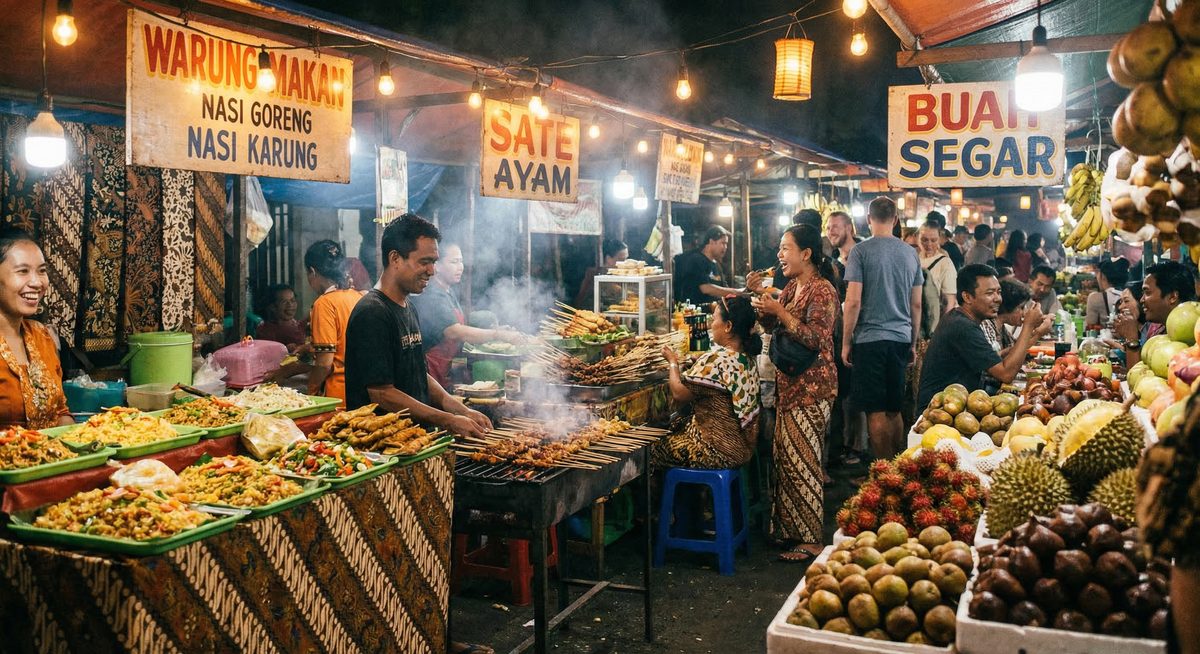
I spent my first week in Jakarta pointing at menu items and hoping for the best. One time I confidently ordered what I thought was fried rice and got a bowl of spicy fish soup instead. The problem wasn't the food (it was excellent, actually). The problem was me stumbling through basic restaurant interactions like a confused tourist.
Indonesian food vocabulary splits into three tiers: survival words, ordering essentials, and the stuff that makes you sound like you've been here a while. Most learners stop at tier one. That's a mistake, because tier two is where you actually start eating what you want.
Survival Tier: Don't Starve
These six words will keep you fed:
- Makanan (food) and minuman (drink) — Seems obvious until you realize half the signs only use these words
- Nasi (rice) — The center of basically everything. If you're vegetarian and say "tanpa daging" (without meat), they might still give you chicken. Say "nasi putih saja" (just white rice) and you're safe
- Ayam (chicken), ikan (fish), daging (meat, usually beef) — Point at the protein, say one of these words, and gesture. It works
- Pedas (spicy) — This is your safety word. "Tidak pedas" means "not spicy," but expect them to ignore this about 40% of the time. Indonesians have different spice calibration than most foreigners
- Air (water, pronounced like "eye-er") — Room temperature by default. If you want cold, say "air dingin" or "air es" (ice water)
With these words you won't starve. You also won't be ordering anything interesting, but that's what tier two is for.
Ordering Essentials: Actually Get What You Want
Now we're talking. These phrases unlock the full menu:
Asking Questions
"Ada apa?" (What do you have?) — The universal question at any warung. They'll rattle off the day's options. You won't catch all of it at first, but you'll hear the protein words you learned earlier.
"Itu apa?" (What's that?) — Point at someone else's plate. If it looks good, follow up with "Saya mau yang itu" (I want that one). This is how I discovered half my favorite dishes.
"Pakai apa?" (What does it come with?) — Useful because Indonesian dishes often include surprise ingredients. I once ordered "sayur asem" thinking it was just vegetables and got a bowl with beef bones in it. Not what I expected as a vegetarian at the time.
Making Requests
"Saya mau..." (I want...) — The basic ordering formula. "Saya mau nasi goreng" gets you fried rice. Add "satu" (one) before the dish name if you want to be extra clear: "Saya mau satu nasi goreng."
"Tanpa..." (without...) and "Pakai..." (with...) — Customization time. "Tanpa sambal" (without chili sauce), "pakai telur" (with egg), "tanpa MSG" (good luck with that one, but you can try). String these together: "Saya mau nasi goreng, tanpa daging, pakai sayur, tidak terlalu pedas" (I want fried rice, no meat, with vegetables, not too spicy).
"Bungkus" (takeaway/to-go) — Say this at the end of your order and they'll pack it up. Different from "bawa pulang" (take home), which means the same thing but sounds more formal. At street stalls, everyone just says "bungkus."
Useful Modifiers
Sedikit (a little), banyak (a lot), setengah (half) — Portion control. "Nasi sedikit" (less rice) is common because they usually heap your plate. "Sambal banyak" if you're brave. "Setengah porsi" (half portion) when you're not that hungry but everything sounds good.
Hangat (warm), dingin (cold), panas (hot) — Temperature matters. "Es" means ice, so "teh es" is iced tea and "kopi panas" is hot coffee. Don't assume anything comes cold unless it says "es" or "dingin."
Common Dishes You'll Actually See
These show up everywhere. Knowing what they are matters more than memorizing random food words:
Nasi goreng — Fried rice, usually with egg, sometimes with chicken or shrimp. The national dish, available 24/7. Quality varies wildly. The best ones I've had were from roadside carts at 2am.
Mie goreng — Fried noodles, same concept. Sometimes made with instant noodles (yes, seriously — it's called "indomie goreng" and people love it).
Gado-gado — Vegetables with peanut sauce. Sounds healthy until you realize the peanut sauce is half oil. Still delicious. Usually safe for vegetarians but check for shrimp paste (terasi).
Sate/Satay — Grilled meat skewers with peanut sauce or soy sauce. Chicken (ayam) and goat (kambing) are most common. Count the sticks because that's how they charge you.
Nasi campur — Mixed rice, meaning rice with a bunch of side dishes. Point at what you want. They'll pile it on one plate and charge by item. This is how you try everything without committing.
Rendang — Slow-cooked beef in coconut and spices. Dry, rich, not soup-like. Padang restaurants do it best. Don't confuse it with "rawon" (beef in black nut soup) or "gulai" (curry).
Bakso — Meatball soup. Sounds simple, but there are about 15 types of noodles and toppings involved. Just say "bakso biasa" (regular bakso) and they'll give you the default version.
Soto — Soup, but every region has a different kind. Soto ayam (chicken), soto betawi (beef in coconut milk), soto banjar (with rice noodles). If someone offers you soto, ask "soto apa?" (what kind of soto?) because you need to know what you're getting into.
If you want to practice these dish names along with hundreds of other Indonesian words, try our flashcard system — it includes audio from native speakers so you know how things actually sound.
Restaurant Phrases That Matter
"Boleh pesan?" (Can I order?) — Polite way to get their attention. You can also just say "permisi" (excuse me), but "boleh pesan" signals you're ready.
"Berapa harganya?" (How much?) — They'll usually tell you at the end, but if you're at a street stall with no prices posted, ask before ordering. Follow up with "berapa semua?" (how much total?) when paying.
"Pedasnya berapa?" (How spicy is it?) — Some places have spice levels (1-5, or "sedang/medium" vs "pedas banget/very spicy"). Most don't, but asking shows you're aware it might melt your face off.
"Saya vegetarian" (I'm vegetarian) — Useful but not foolproof. They might still serve you chicken broth or shrimp paste. If you're strict, learn "tanpa daging, tanpa ayam, tanpa ikan, tanpa terasi" (no beef, no chicken, no fish, no shrimp paste). Yes, it's a mouthful.
"Sudah kenyang" (I'm full) — When the waiter keeps trying to upsell you more food. "Sudah cukup" (already enough) works too. They're just being hospitable, but sometimes you need an exit phrase.
"Minta bon" (Can I have the check?) — "Bon" comes from French. Some places say "nota" instead. Or just catch their eye and do the universal hand-writing-in-air gesture. They'll understand.
Street Food Complications
Street stalls operate differently than restaurants. Here's what changes:
No menus. You ask "ada apa" and they tell you, or you look at what's displayed and point. Half the time there's no seating, so factor in whether you're eating there ("makan di sini") or taking away ("bungkus").
Pay after eating. Most warungs bring the bill after you finish. Street vendors might want money up front, especially if you're taking food to go. Just read the situation.
Sharing is assumed. If you sit down at a communal table, people might offer you their sambal or chat while you eat. It's not weird, it's normal. If you want to blend in, learn the polite phrases for accepting or declining.
Spice Management Strategy
Indonesian food is spicy by default. Here's how to navigate that:
"Tidak pedas" doesn't mean "not spicy." It means "less spicy than usual." If you have zero spice tolerance, say "tidak pedas sama sekali" (not spicy at all) and "tanpa sambal" (no chili sauce). They'll probably still put a little chili in there. It's cultural.
Sambal comes on the side at restaurants, mixed in at street stalls. At proper restaurants, ask for "sambal terpisah" (separate sambal) so you can control it. At street stalls, it's going in the wok whether you like it or not, so manage expectations.
Regional differences matter. Padang food (from West Sumatra) is reliably spicy. Javanese food is usually milder and sweeter. Balinese food sits somewhere in between. If you're spice-averse, stick to Javanese restaurants and avoid anything labeled "Padang."
Learn your vegetables. When you order "cap cay" (stir-fried vegetables) or "tumis kangkung" (stir-fried water spinach), they still might add chili. Say "tanpa cabe" (without chili pepper) if you want it truly mild.
What's Actually Hard About Food Vocabulary
It's not the words themselves. It's the context. Three things trip people up:
1. Regional variations. "Gorengan" means fried snacks in Jakarta but might mean something else in Bali. "Lalapan" (raw vegetables) is standard in Sundanese restaurants but uncommon in Padang places. You learn this by eating in different regions and making mistakes.
2. Unwritten assumptions. If you order "soto" without specifying, they'll give you whatever soto that stall makes. If you order "nasi goreng," it probably comes with a fried egg on top unless you say otherwise. Indonesians grow up knowing these defaults. You have to ask.
3. Fast replies. When you ask "ada apa," they'll respond in rapid-fire Indonesian, listing six dishes you've never heard of. You'll catch maybe two words. This is normal. Just ask them to repeat ("bisa ulangi?") or point at the pictures if they have any.
The fix for all three: eat more Indonesian food and pay attention to what people around you are ordering. Vocabulary lists help, but immersion is faster. Or practice with spaced repetition flashcards before your trip so the words stick in real-time conversations.
Worth Learning
Last month I sat at a warung in Yogyakarta and ordered entirely in Indonesian (with no pointing). The owner seemed genuinely pleased that a foreigner could string together "saya mau nasi campur, pakai tempe dan tahu, tanpa sambal, sayur banyak." She gave me extra portions and we ended up chatting about where I learned Bahasa.
That doesn't happen when you point at the menu. Language matters, even if your grammar is broken and your accent is terrible. Food vocabulary is one of the highest-leverage things you can learn because you use it every single day. Start with tier one, get comfortable with tier two, and you'll figure out tier three naturally by being nosy about what other people are eating.
Also, if someone offers you "durian," know what you're getting into. That's a whole separate conversation.