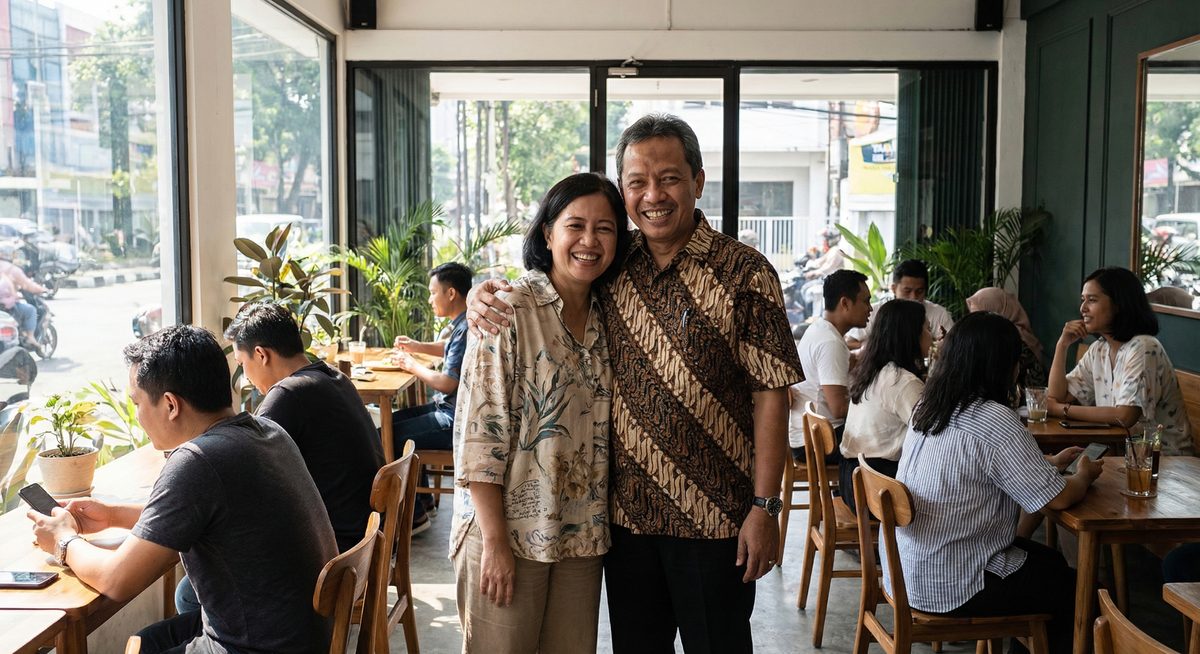
I used to say "halo" to everyone. Taxi drivers, hotel staff, people I met at parties. It's what the textbook taught me. Technically correct, universally understood, impossible to get wrong.
The problem? Nobody actually says it that way. Not locals, anyway. Using "halo" everywhere is like walking into a British pub and saying "greetings, fellow human" instead of "alright." You'll be understood, but you'll sound strange.
Indonesian greetings depend on time of day, formality, and how well you know the person. Get them right and you stop sounding like a tourist with a phrasebook. Here's what people actually say.
The Time-Based Greetings You'll Hear Constantly
Most Indonesians greet each other based on what time it is. Four phrases cover the entire day.
Selamat pagi (good morning) runs from sunrise until around 11am. This is the formal version. If you're meeting someone for the first time, entering an office, or talking to someone older, use this.
Selamat siang (good afternoon) covers 11am to roughly 3pm. Same formality level as pagi. It's what you say when the sun's high and it's too late for morning but too early for evening.
Selamat sore (good late afternoon/early evening) runs from about 3pm until sunset, usually around 6pm. The boundaries blur a bit depending on region and personal preference, but this is the safe window.
Selamat malam (good evening/good night) starts after sunset and runs until you go to bed. Unlike English, where "good night" mostly means goodbye, Indonesians use selamat malam both for greeting and parting in the evening.
Here's the catch: these are formal. If you're walking into a government office or meeting your partner's parents for the first time, absolutely use them. But with friends or people your age in casual settings, they can sound stiff.
What Friends Actually Say to Each Other
When I'm texting a mate or bumping into someone I know at a coffee shop, I don't use selamat pagi. That would be weird.
Instead: "Pagi!" or "Siang!" or "Sore!"
Drop the selamat, keep the time word. It's the Indonesian equivalent of saying "morning!" instead of "good morning." Casual, friendly, appropriate for people you know.
Even more casual: "Hei!" or "Hai!"
Yes, these are borrowed from English, but they're fully absorbed into everyday Indonesian now. You'll hear them constantly among younger people and in urban areas. I use hei with close friends, usually followed by their name.
The absolute most common greeting between friends, though? "Apa kabar?"
Literally "what news?" but it means "how are you?" or "what's up?" The standard response is "baik" (good) or "baik-baik saja" (all good). Sometimes people skip the greeting entirely and just ask "apa kabar?" as their opening line.
I learned a shortcut from Jakarta friends: "Gimana?"
Means "how's it going?" Extremely casual. Only use it with people you know well. It's the kind of greeting you throw out when you're genuinely interested in how someone's day went, not just being polite.
The Regional Variations Nobody Warns You About
Indonesia has over 700 languages. Greetings vary by island, sometimes by city. In Java, you'll often hear "Sugeng enjing" (Javanese for good morning) instead of the standard Indonesian version, especially in Yogyakarta and Solo.
In Bali, "Om swastiastu" is the Hindu greeting. If someone says it to you, you can respond the same way. It roughly means "may peace be with you."
Sulawesi has its own variations. Sumatra too. The good news: everyone understands standard Indonesian, so you're never truly stuck. But knowing a local greeting, even poorly, earns you instant goodwill.
I tried using "sugeng enjing" in Yogyakarta once. My pronunciation was terrible. The shopkeeper laughed, corrected me gently, then gave me a discount on coffee. Local greetings are social shortcuts.
When You're Not Sure What Time It Is
Sometimes you genuinely don't know if it's still siang or if sore has started. The sun's ambiguous, you've been inside all day, and now you're walking into a meeting.
Safe option: "Selamat siang" until about 4pm, then switch to "selamat sore."
Safer option: "Permisi" (excuse me) as your opener, then move straight into what you need. It's not technically a greeting, but it works as one in formal situations.
Safest option if you're really unsure: watch what the person you're meeting says first, then match it. Indonesians are good at reading context. If they say sore and you respond with sore, you're fine.
The Goodbye Problem
English uses different words for hello and goodbye. Indonesian often uses the same word.
If someone greets you with "selamat pagi" at 9am, you can respond "selamat pagi" back. If you're leaving at 9am, you can also say "selamat pagi" as your goodbye. It works both ways.
The dedicated goodbye word is "sampai jumpa" (until we meet again) or the shorter "jumpa lagi" (meet again). These work any time of day.
Casual version: "Dadah" or "dah", borrowed from English "ta-ta." Extremely informal. I use it with close friends when leaving, never in professional settings.
If you're leaving somewhere for good, especially if someone did you a favour: "Terima kasih, sampai jumpa" (thank you, see you later). Covers politeness and departure in one phrase.
What I Wish Someone Had Told Me Earlier
Greeting people properly in Indonesian isn't about memorising rules. It's about noticing patterns and matching the situation.
Formal setting, older person, first meeting? Use the full selamat version for time of day. Friends, casual environment, relaxed vibe? Drop the selamat or just say "hei."
Not sure? Go slightly more formal than you think you need. Indonesians appreciate the effort, and nobody will fault you for being too polite.
The biggest mistake I made early on was overthinking it. I'd stand there calculating time zones and formality levels while the person waited for me to just say something. Better to say "selamat siang" at 2:45pm when technically sore might be more accurate than to freeze up entirely.
Here's what actually matters: making the effort. When you greet someone in Indonesian instead of English, you're signalling respect for the culture. Even if you mangle the pronunciation or use the wrong time greeting, people appreciate that you tried.
How to Actually Get Better at This
You won't learn this from a list. You learn it by listening.
Next time you're in Indonesia, pay attention to how people greet each other. Notice when they use selamat pagi versus pagi. Listen for apa kabar and how people respond. Watch what happens when someone walks into a shop, a restaurant, an office.
Then copy it. Not perfectly, just approximately. You'll make mistakes. I still do. Last week I used selamat siang at 4:30pm because I wasn't paying attention. My friend laughed and said "sore, bro." We moved on.
The particles we covered in our guide to lah, dong, sih, and kok work the same way. You learn by noticing, copying, making mistakes, and adjusting.
If you want structured practice that goes beyond greetings and gets you speaking naturally, our interactive lessons include real conversational patterns, not just textbook phrases. Or check out our guide on formal versus informal Indonesian to understand when to be polite and when to relax.
Just don't walk around saying "halo" to everyone. You're better than that.